Tree Removal Services in Glenbrook Nevada
Safe Tree Removal in Glenbrook Nevada
When you need professional tree removal in Glenbrook Nevada, Armstrong Tree Service brings certified expertise, specialized equipment, and rigorous safety protocols to every job, no matter how challenging. Taking down a tree isn’t something you figure out as you go. A mature Jeffrey pine or white fir can weigh several tons and stand eighty feet tall. When it comes down, everything within its reach is at risk—your home, your vehicles, power lines, neighboring properties, and anyone standing nearby. The physics of tree removal are unforgiving, and the margin for error is zero. Our tree removal service in Glenbrook Nevada handles every removal with a methodical, safety-first approach developed through years of experience in the Tahoe Basin. We assess each tree individually—its height, lean, weight distribution, decay pattern, and proximity to structures—and determine the safest removal method. For trees in open areas, controlled directional felling brings them down precisely where we intend. For trees near homes, power lines, or other obstacles, sectional dismantling using climbing techniques or bucket trucks removes the tree piece by piece with complete control. For the most challenging situations, our Crane Tree Removal service brings heavy-lift capability that eliminates risk to surrounding structures. For trees that pose an immediate danger, our Hazard Tree Removal service provides rapid response. For complete tree care beyond removal, our Tree Service handles maintenance and health care.
Our Tree Removal Methods in Glenbrook Nevada
Controlled Directional Felling
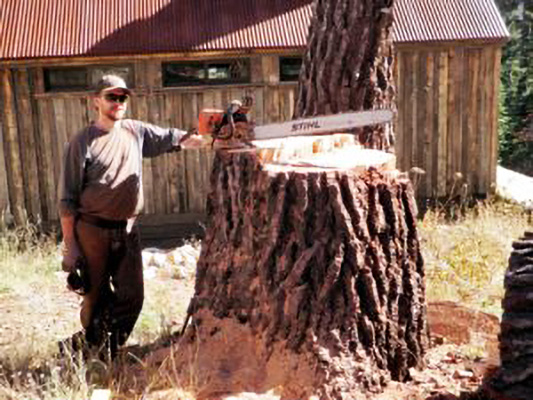
When a tree is located in an open area with sufficient space for its full height to fall, controlled directional felling is the most efficient removal method. This isn’t simply cutting a tree and hoping it falls the right way. Our crew chief calculates the tree’s natural lean, assesses weight distribution throughout the crown, evaluates wind direction and speed, and determines the precise notch and back cut that will guide the tree to fall within a few degrees of the intended direction. A precisely cut notch on the fall side removes a wedge of wood, and a back cut on the opposite side creates a hinge that controls the tree’s descent from start to finish. The hinge wood holds until the tree is committed to the fall, then breaks cleanly as the tree lands exactly where intended. This technique requires experience, careful calculation, and an intimate understanding of how different species behave when cut. For trees too close to structures for felling, we use sectional dismantling instead.
Sectional Dismantling and Rigging
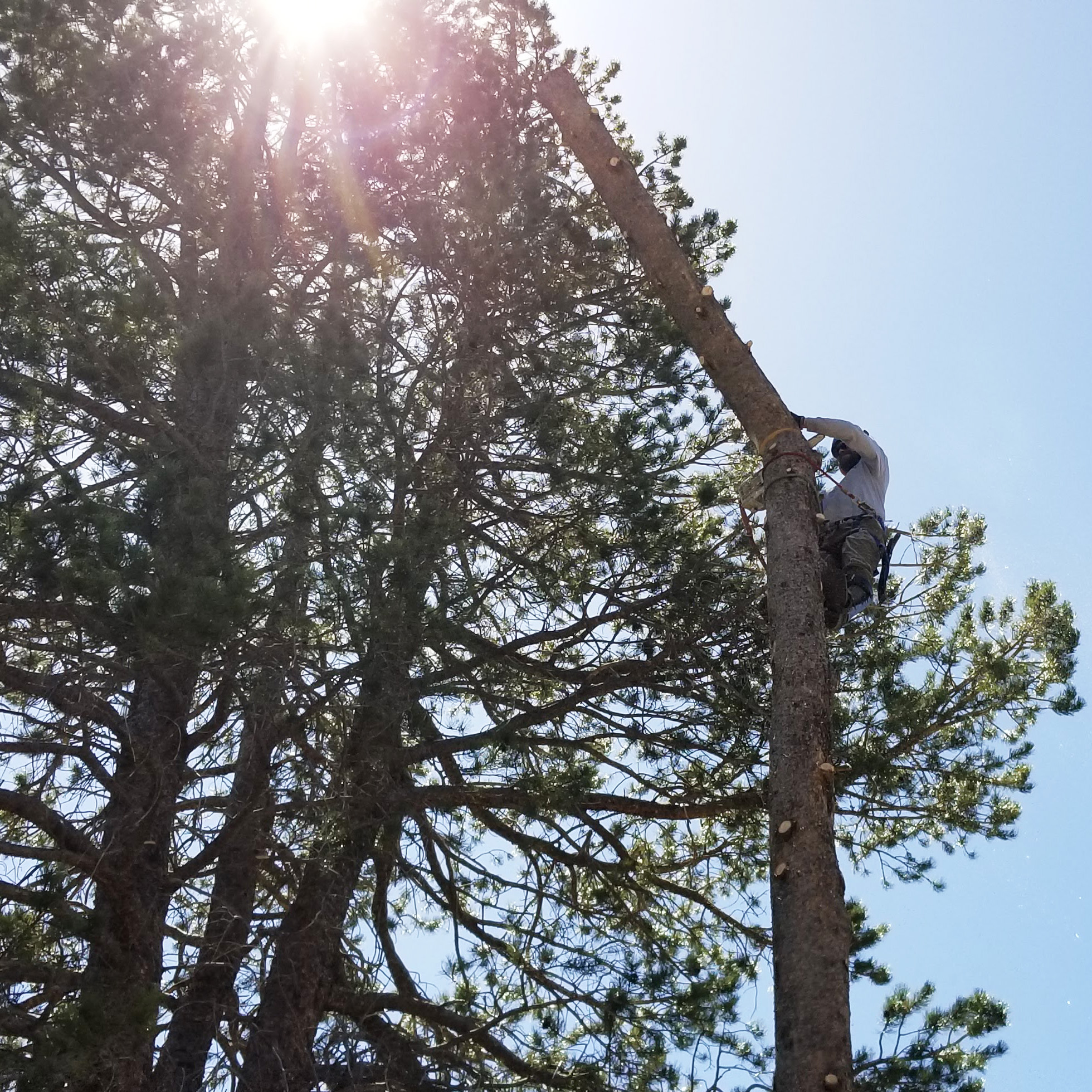
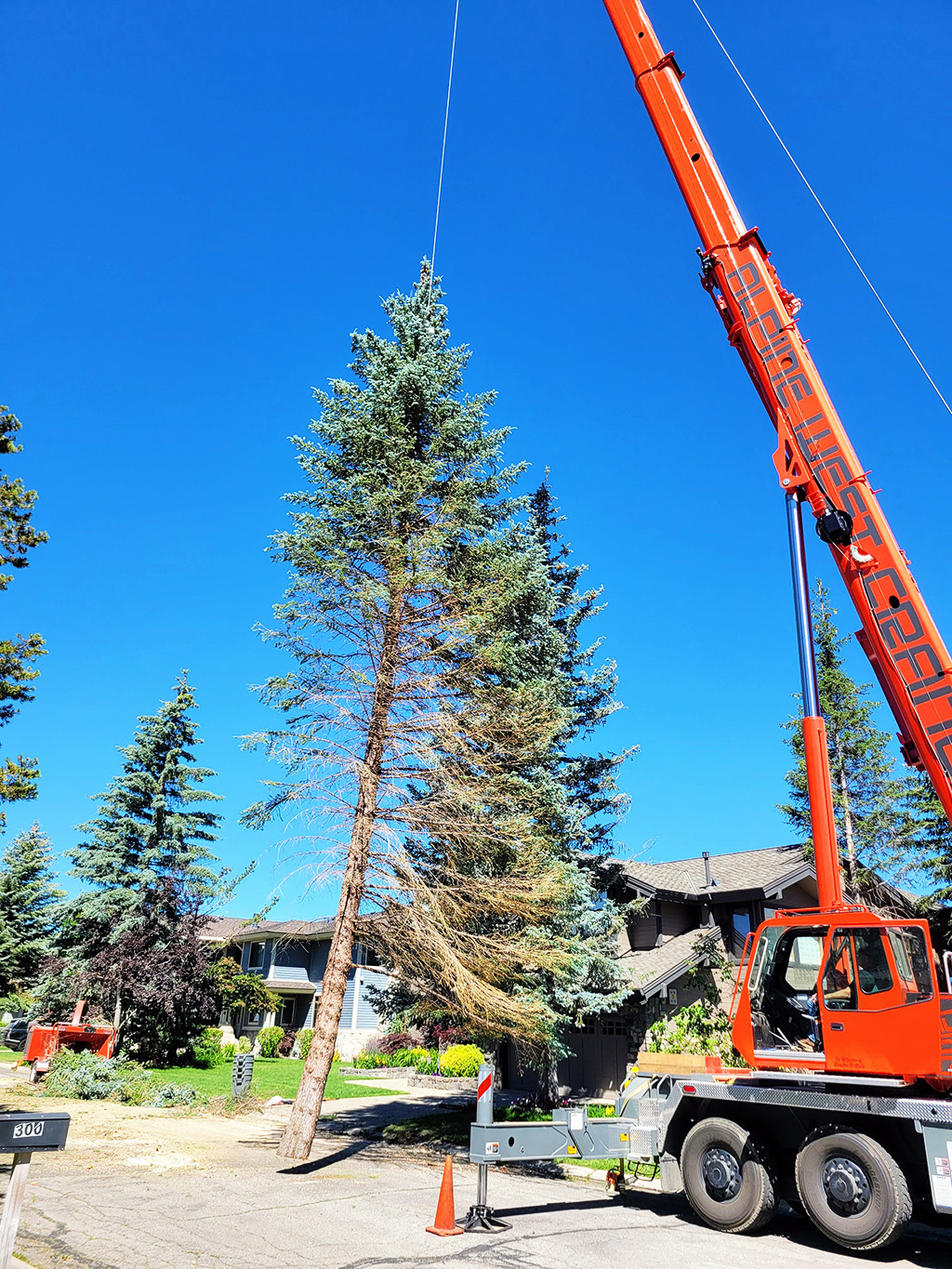
For trees near homes, power lines, roadways, or other obstacles, sectional dismantling removes the tree from the top down in controlled pieces rather than bringing it down in a single fall. Our climber ascends the tree using techniques that don’t damage the trunk—unlike some operators who use climbing spikes on every tree, we only spike trees being removed. From the top, the climber works downward, cutting limbs and trunk sections that are carefully lowered to the ground using ropes and rigging. Each piece is controlled throughout its descent, eliminating any risk of impact with surrounding structures. This technique is slower than felling but is the only safe method for trees in confined spaces. For large trees where climbing and rigging would be excessively time-consuming or where the tree is too compromised to climb safely, our Crane Tree Removal service picks sections of trunk directly and places them on the ground with precision control. For trees that have already partially failed, our Hazard Tree Removal service handles the most dangerous situations with specialized protocols.
Post-Removal Cleanup and Options
After the tree is on the ground, our crew sections the trunk into manageable lengths. You have options for what happens next. The wood can be processed into firewood and left stacked on your property. It can be loaded and hauled away entirely. Or the trunk can be left in place for your own use while we remove the branches and debris. Our Stump Grinding service is available as an add-on, grinding the remaining stump well below ground level so the area can be replanted, landscaped, or simply mowed. For firewood processing, our Firewood service provides cut, split, and delivered firewood from your removed trees or other local sources throughout Glenbrook Nevada.
When Tree Removal Is Necessary in Glenbrook Nevada
The decision to remove a tree isn’t made lightly. Our Certified Arborist and Arborist services provide professional assessments that help property owners make informed choices about whether removal is truly necessary or whether the tree can be saved through proper care. Dead and dying trees are the clearest candidates for removal. A tree that has lost significant portions of its canopy, shows extensive bark loss, or has fungal conks growing from the trunk is in decline and will only become more hazardous with time. Trees with structural defects—large cracks in major limbs or the trunk, split trunks where two leaders diverge, or severe lean that has developed recently—pose imminent failure risk and should be removed before they fail on their own schedule. Trees damaged by storms, construction activity, or previous improper tree work may be beyond recovery. Trees growing in locations where they threaten structures, utilities, or safe use of the property may need removal even if they’re otherwise healthy. And trees infested with bark beetles or other pests may need to be removed to prevent the infestation from spreading to neighboring healthy trees. For trees that don’t need removal but need maintenance, our Tree Trimming and Tree Pruning services handle routine care. For fire safety vegetation management, our Defensible Space and Fuels Reduction services address wildfire compliance. For large-scale clearing, our Lot Clearing service handles acreage projects.
The Difference Between Standard and Hazardous Tree Removal
Not all tree removals carry the same level of risk, and understanding the distinction helps property owners understand why some removals require specialized approaches. Standard tree removal involves trees that are structurally sound and can be climbed safely. The tree may be unwanted, in the way of construction, or simply in decline, but it isn’t at immediate risk of failure. Standard removals follow the methods described above—felling or sectional dismantling as the situation requires. Hazardous tree removal involves trees that cannot be safely climbed because they’re structurally compromised. A tree with extensive internal decay may appear solid from the outside but be hollow and incapable of supporting a climber’s weight. A tree that has partially failed with major limbs hung up in neighboring trees presents unpredictable forces that can shift catastrophically during removal. A tree leaning heavily over a structure may not have a safe direction for felling. Our Hazard Tree Removal service addresses these dangerous situations using techniques that don’t require climbing the compromised tree—typically crane-assisted removal or mechanical felling from a safe distance. For winter access to tree work sites, our Snow Removal service handles seasonal conditions throughout Glenbrook Nevada.
Why Armstrong Tree Service Is the Right Choice for Tree Removal in Glenbrook Nevada
Safety Is Never Compromised. Tree removal is dangerous work, and the consequences of a mistake can be catastrophic. Our crew follows established safety protocols on every job: pre-work hazard assessment, clearly defined drop zones and escape routes, personal protective equipment for every team member, and communication systems that keep ground crew and climbers coordinated at all times. We’re fully licensed and insured, so when work is being done on your Glenbrook Nevada property, you’re protected.
The Right Equipment for Every Situation. Different trees require different removal approaches, and having the right equipment is essential for both safety and efficiency. Our fleet includes bucket trucks for mid-height access, professional climbing and rigging gear for tall trees, stump grinders for complete removal, and crane capability for the most challenging situations. We don’t force one method on every tree—we match the approach to the specific tree and site conditions. For trees that need the precision of heavy lifting, our Crane Tree Removal service eliminates the risks of conventional removal. For hazardous situations, our Hazard Tree Removal service provides the specialized response these dangerous jobs demand.
AREA WE SERVED
Proudly delivering professional tree removal services across Glenbrook Nevada and the surrounding Tahoe region. From standard removals to the most hazardous trees, Armstrong Tree Service is your trusted local partner.
Frequently Asked Questions About Tree Removal in Glenbrook Nevada
How do I know if a tree needs to be removed?
Signs that a tree may need removal include significant dead branches throughout the canopy, large cracks in the trunk or major limbs, fungal growth at the base, leaning that has developed recently, extensive bark loss, and proximity to structures that creates ongoing risk. Our Certified Arborist provides professional assessments to help you make an informed decision.
How much does tree removal cost in Glenbrook Nevada?
Costs vary based on the tree’s size, location, accessibility, and the removal method required. We provide free, no-obligation estimates after assessing the tree and site. The price includes all labor, equipment, and standard cleanup.
What’s the difference between standard and hazardous tree removal?
Standard removal involves structurally sound trees that can be climbed safely. Hazardous removal involves trees that are compromised—extensively decayed, partially failed, or too dangerous to climb. Our Hazard Tree Removal service uses specialized techniques for these dangerous situations.
Do you use a crane for tree removal?
Yes, when the situation requires it. Our Crane Tree Removal service is used for trees that cannot be safely climbed or felled, trees near structures where precision placement of removed sections is essential, and trees that have partially failed.
What happens to the wood after removal?
You choose: we can process it into firewood, leave it on site, or haul everything away. Our Firewood service provides cut, split, and delivered firewood from your removed trees.
Do you handle stump removal?
Yes. Our Stump Grinding service grinds stumps well below ground level so the area can be replanted, landscaped, or mowed.
Are you licensed and insured?
Yes. Armstrong Tree Service is fully licensed and carries comprehensive liability insurance and workers’ compensation coverage throughout Glenbrook Nevada.
Do I need a permit for tree removal?
Permit requirements vary by location within the Tahoe Basin. Many jurisdictions require permits for tree removal, particularly for trees above a certain size or in environmentally sensitive areas. We can advise you on local requirements during our assessment.