Defensible Space Services
Professional Defensible Space
When you need defensible space work, Armstrong Tree Service brings the equipment, the crew, and the regulatory knowledge to bring your property into full compliance with California fire safety requirements. Defensible space isn’t a suggestion in the Tahoe Basin—it’s the law. California Public Resources Code 4291 requires every property owner in a wildfire-prone area to maintain specific cleared zones around structures. These zones are based on decades of fire science showing that the vegetation management within one hundred feet of your home is the single most important factor in determining whether your house survives a wildfire. When embers fly ahead of a fire front—sometimes traveling a mile or more—they don’t need direct flames to ignite your home. They need fuel. The juniper bushes against your foundation. The dead limbs hanging over your roof. The dense trees crowding your deck. The wood mulch against your siding. Our defensible space service removes these fuels and creates the vegetation management zones that California law requires, using standards established by CAL FIRE and your local fire district. For the tree work component, our Tree Removal and Tree Trimming services handle the cutting. For larger-scale treatment, our Fuels Reduction service handles acreage projects. For complete tree care, our Tree Service provides comprehensive solutions.
The Three Defensible Space Zones
Zone Zero — Zero to Five Feet
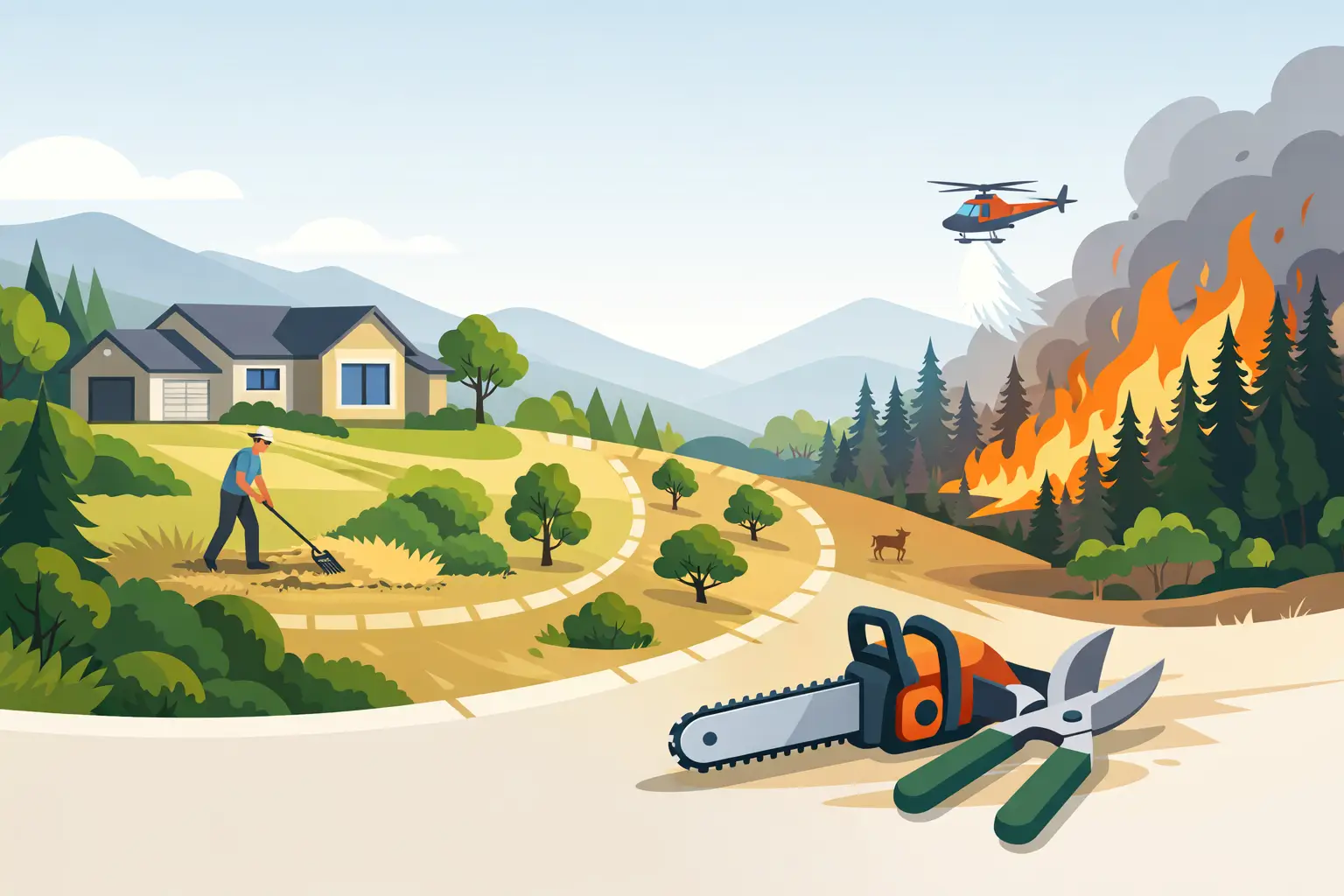
Zone Zero is the newest and most critical requirement, mandated by California law effective January 2023. This zone extends from your home’s walls outward five feet in every direction, and the standard is absolute: no combustible material of any kind. No wood mulch or bark against the foundation. No shrubs, bushes, or ground cover plants. No stacked firewood leaning against the house. No wooden fences attached directly to the structure without a non-combustible section at the wall. The science is clear: embers accumulate at the base of walls, in corners, and where foundation meets siding. If they find fuel there, ignition follows. If the five-foot perimeter is bare, the embers have nothing to ignite. Creating Zone Zero often means removing foundation plantings that have been there for decades—junipers, ornamental shrubs, bark mulch, and other landscaping that is attractive but dangerous in a fire.
Zone One — Five to Thirty Feet
Zone One extends from Zone Zero outward to thirty feet from all structures. Here the goal is to reduce fire intensity and prevent flames from climbing from ground level into tree canopies—what fire professionals call “ladder fuels.” All dead vegetation must be removed. Tree branches must be pruned to at least six feet above ground, higher if shrubs beneath create ladder conditions. Tree canopies should be spaced at least ten feet apart, with wider spacing on slopes. Plants should be irrigated and maintained, with no accumulation of dry material beneath them. Our Tree Trimming service handles limbing and pruning. Our Tree Pruning service addresses structural issues in remaining trees.
Why Defensible Space Matters in the Tahoe Basin
The Sierra Nevada is one of the most fire-prone regions in North America. Dense forests, steep terrain, dry summers, and seasonal winds create conditions where wildfires can spread with terrifying speed. The Angora Fire, the Caldor Fire, and countless smaller incidents have proven that Tahoe homes are at genuine risk. Defensible space cannot guarantee your home will survive a wildfire—but the absence of defenseless space is a near-guarantee that it won’t. Research consistently demonstrates that homes ignite primarily from embers, not direct flame contact. Embers land on roofs, in gutters, against foundations, and in landscaping. If those embers find fuel, ignition occurs. If they find nothing combustible, they cool and die. Creating defensible space removes the fuels that embers need. For firewood from trees removed during defensible space work, our Firewood service provides cut and split wood. For stump grinding, our Stump Grinding service eliminates what remains. For hazardous trees, our Hazard Tree Removal service provides safe removal. For the most challenging situations, our Crane Tree Removal service provides heavy-lift capability.
The Defensible Space Process
Assessment and Planning
Every project starts with a thorough property walk-through. We evaluate your property against current CAL FIRE standards and local fire district requirements. We identify what’s compliant, what needs work, and what the priorities should be. We walk the property with you, explaining what needs to happen and why. Based on this assessment, we provide a detailed scope of work and written estimate.
Execution and Documentation
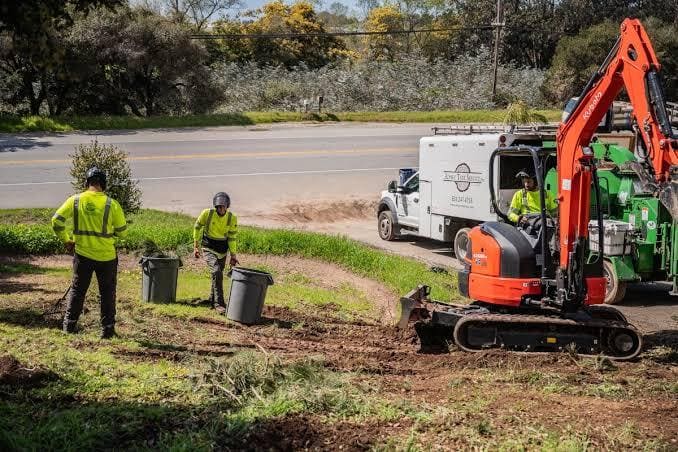
Our crew performs the vegetation management according to plan. We remove designated trees and shrubs, prune remaining trees to required heights, thin dense stands, clear ground fuels, and create the zones that give your home its best chance. We handle all debris—chipping what can be chipped, hauling what can’t, and leaving your property clean. After completion, we provide documentation for your insurance company or fire district records. For ongoing maintenance, our Tree Trimming and Tree Pruning services provide regular care. For large-scale projects, our Lot Clearing service handles acreage. For winter access, our Snow Removal service manages seasonal conditions. For professional assessment, our Certified Arborist and Arborist services provide expert evaluation.
Why Armstrong Tree Service Is the Right Choice for Defensible Space
We Know the Regulations. Defensible space requirements come from multiple sources—CAL FIRE, local fire protection districts, insurance companies, and sometimes HOAs. Our team understands these overlapping requirements and creates plans that satisfy all of them.
We’re Tree Experts, Not Just Brush Clearers. Defensible space involves significant tree work—removing hazard trees, pruning lower limbs, thinning dense stands. A general landscaper with a chainsaw can do more harm than good. Our Certified Arborist ensures trees that remain are pruned correctly, structurally sound, and positioned to contribute to—rather than threaten—your home’s fire safety. For complete tree care, our Tree Service provides comprehensive solutions. For tree removal, our Tree Removal service handles the job safely. For firewood, our Firewood service provides cut and split wood. For stump grinding, our Stump Grinding service eliminates what remains. For larger projects, our Fuels Reduction service handles acreage treatment.
Frequently Asked Questions About Defensible Space
What is defensible space?
Defensible space is the vegetation management required by California law within one hundred feet of structures in wildfire-prone areas. It creates zones of reduced fuel that give your home its best chance of surviving a wildfire.
Is defensible space really required by law?
Yes. California Public Resources Code 4291 mandates defensible space for properties in State Responsibility Areas and many Local Responsibility Areas. Non-compliance can result in fines and affect insurance coverage.
What is Zone Zero?
Zone Zero is the five-foot perimeter immediately around your home where no combustible material is allowed. This became mandatory in January 2023 and includes wood mulch, shrubs, stacked firewood, and combustible fencing attached to the house.
Will defensible space make my property look bare?
No, when done correctly. Defensible space means strategic vegetation management that reduces fire risk while preserving natural beauty. Properly spaced trees with pruned lower limbs create an open, park-like appearance.
How often does defensible space need maintenance?
Annual maintenance is typically required. Vegetation grows back, trees drop needles, and standards evolve. We offer ongoing maintenance programs to keep your property compliant.
Can defensible space help with my insurance?
Yes. Many insurers now require defensible space as a coverage condition, and some offer discounts for documented compliance. We provide the documentation insurers need.
Do you work with local fire districts?
Yes. We’re familiar with specific requirements of fire protection districts throughout the Tahoe Basin and ensure our work meets or exceeds their standards.
How long does a defensible space project take?
Timeline depends on property size, vegetation density, and work scope. A typical residential project takes one to three days. We provide a detailed timeline during assessment.