Crane Tree Removal Services
Professional Crane Tree Removal
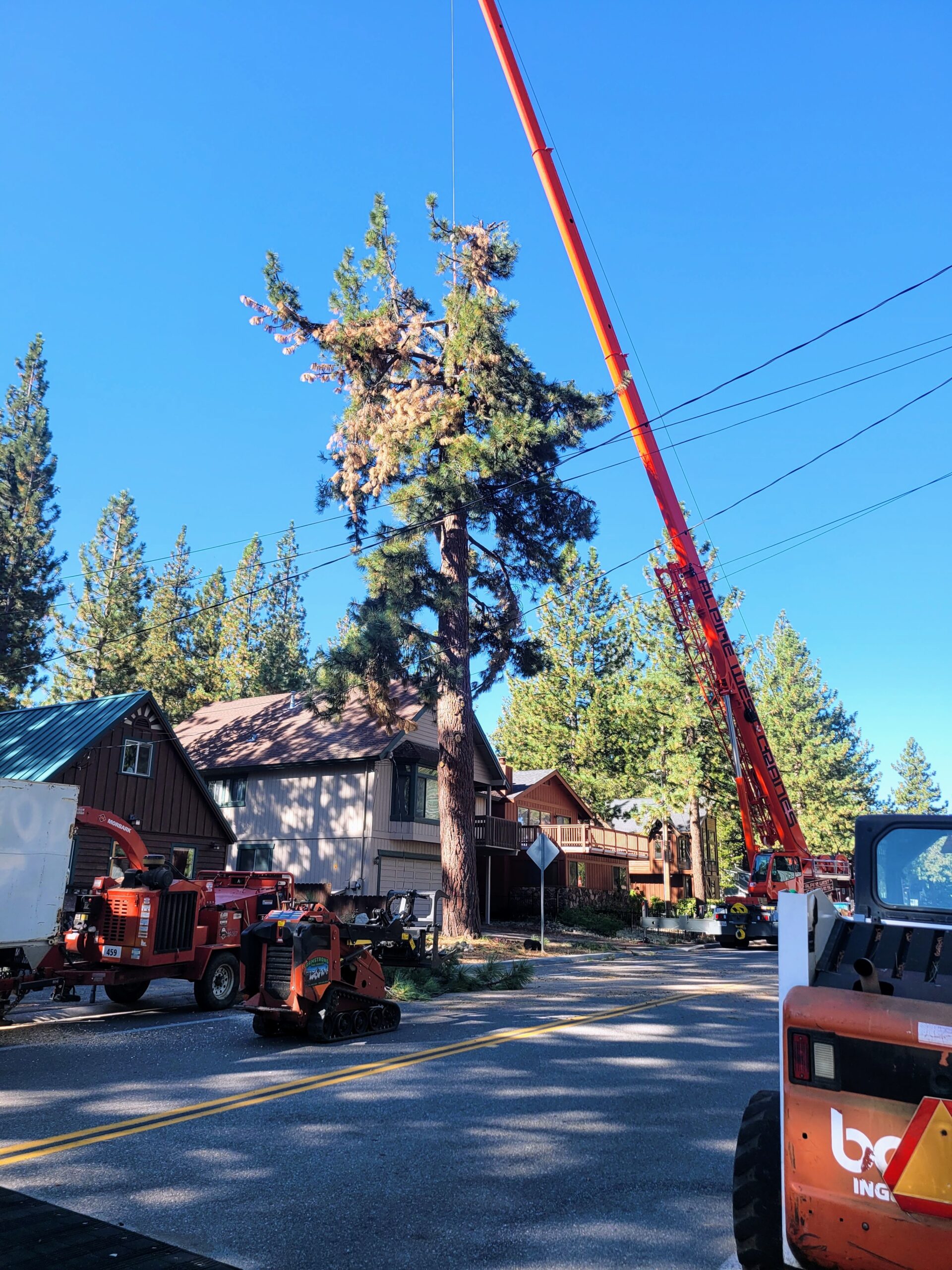
When you need crane tree removal, Armstrong Tree Service brings a mobile crane, a skilled operator, and an experienced ground crew to lift entire sections of tree with absolute control. Most trees can be removed through standard methods—felling in open areas, sectional dismantling by a climber in tighter spaces. But some trees demand more. A massive pine with advanced heart rot that cannot support a climber’s weight. A fir leaning heavily over a home with no safe direction to fell. A tree that has partially failed and is hung up in neighboring trees, with stored tension that could release catastrophically if cut conventionally. A tree in a location with simply no room to lower pieces on ropes without risking damage to the structure below. These situations call for a crane—a mobile heavy-lift machine that can reach over obstacles, pick sections weighing thousands of pounds, and place them precisely on the ground with zero impact to surrounding structures. For standard removals that don’t require heavy lift, our Tree Removal service handles the job. For hazardous trees, our Hazard Tree Removal service addresses dangerous situations. For complete tree care, our Tree Service provides comprehensive solutions.
When Crane Removal Is Necessary
Trees That Cannot Be Climbed
The most common reason for crane deployment is that the tree cannot be safely climbed. Internal decay from fungal infection can hollow out a trunk while the tree continues producing healthy foliage—looking solid from the outside but incapable of supporting a climber’s weight. Our Certified Arborist or Arborist assesses these trees before work begins, probing for cavities, listening for hollow sounds, and evaluating fungal indicators. When a tree fails the climbability assessment, crane removal eliminates the need for anyone to ascend the compromised trunk. The climber works from a basket suspended by the crane, making cuts on sections that are immediately lifted away. The climber’s weight never touches the tree.
Trees Near Structures with No Drop Zone
Many properties have trees in locations where there’s simply no safe place for pieces to land during conventional removal. A large pine between a home and power lines. A fir overhanging a neighbor’s roof. A tree surrounded by landscaping that would be destroyed by falling debris. Even careful roped lowering carries risk—a piece that swings unexpectedly or a rope that parts under load can cause significant damage. Crane removal eliminates this risk by picking each piece directly upward and swinging it over obstacles to a clear landing zone. Nothing touches the ground until placed there intentionally. For trees near structures that don’t require crane removal, our Tree Removal service handles standard removals with conventional rigging.
How Crane Tree Removal Works
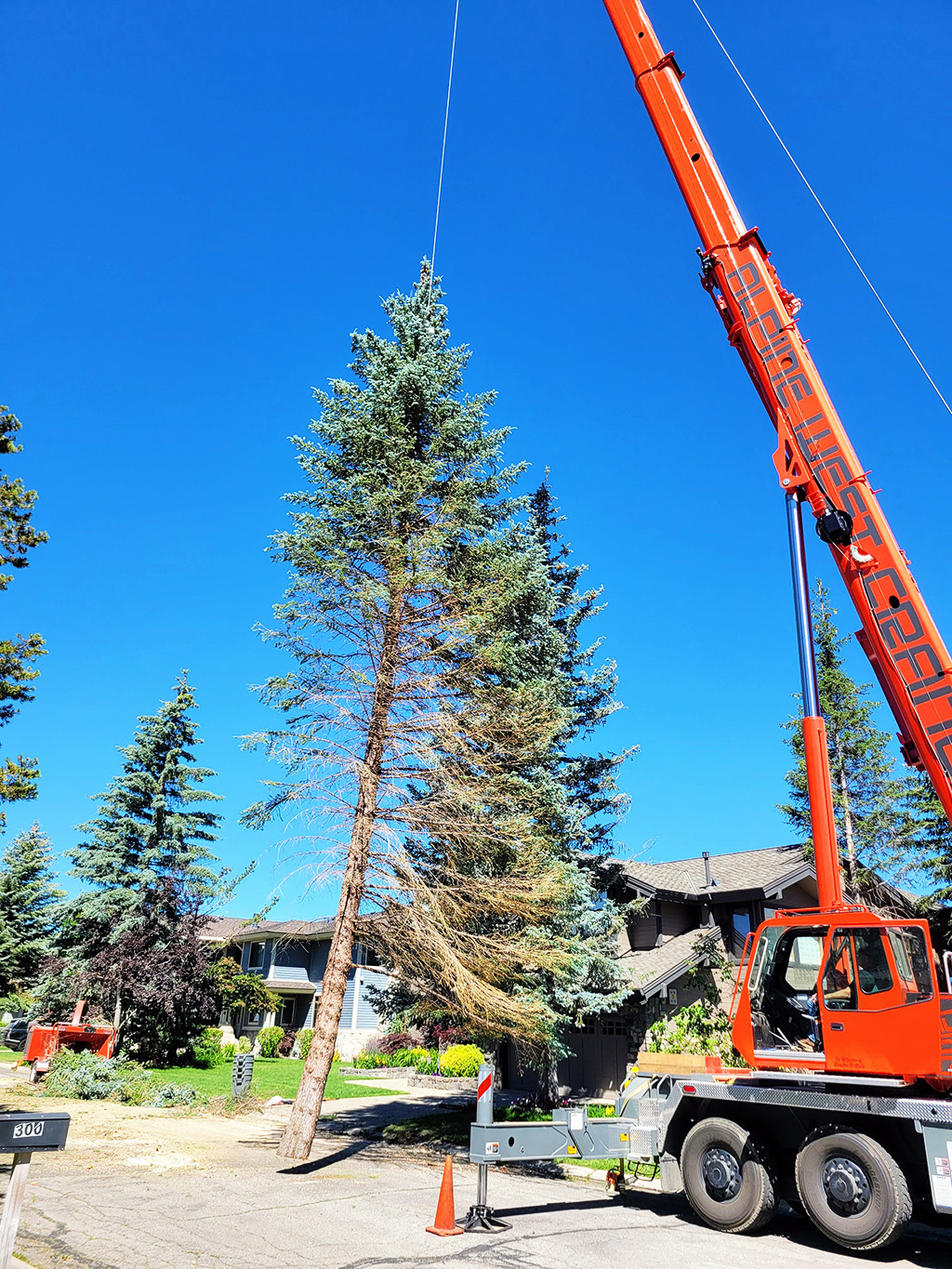
Every crane removal begins with thorough site assessment. We evaluate the tree’s height, lean, weight distribution, and structural condition. We assess surrounding obstacles—structures, power lines, other trees, terrain features. We determine crane placement for optimal reach and stability, considering ground conditions, slope, and access. Based on this assessment, we select the appropriate crane size—with sufficient reach to access the entire tree and sufficient lifting capacity to handle the heaviest sections. On the scheduled day, the crane arrives and sets up on the predetermined location. Outriggers extend to stabilize the machine. The climber, working from a basket suspended by the crane, is lifted to the top of the tree. Working from the top down, they attach slings around each section. The crane takes the weight, the climber makes the cut, and the crane lifts the piece clear and swings it to the landing zone. This process repeats until the entire tree is on the ground. Because each piece is under positive crane control throughout, there is zero risk of impact with surrounding structures. After removal, our crew handles all debris—sectioning the trunk, chipping branches, and leaving your property clean. For firewood, our Firewood service processes usable timber. For stump removal, our Stump Grinding service eliminates what remains.
Crane Removal vs. Standard Removal
The primary difference is how tree sections reach the ground. In standard removal, pieces cut by the climber are lowered on ropes—either falling in a controlled drop zone during felling, or rigged and lowered by ground crew during sectional dismantling. This requires space for descent and skilled rope work. In crane removal, pieces are lifted directly upward and swung through the air to a landing zone separate from the tree’s location. The tree can be in the most confined space imaginable—the crane simply reaches over obstacles. The trade-off is cost and access. Crane removal requires a mobile crane, certified operator, and sufficient setup space. It’s more expensive than standard removal but essential when tree condition or location makes conventional methods unsafe. For trees not requiring crane removal, our Tree Removal service handles standard removals efficiently. For ongoing maintenance, our Tree Trimming and Tree Pruning services keep remaining trees healthy. For fire safety, our Defensible Space and Fuels Reduction services address wildfire compliance. For lot clearing, our Lot Clearing service handles acreage. For winter access, our Snow Removal service manages seasonal conditions.
Why Armstrong Tree Service Is the Right Choice for Crane Tree Removal
Complete Crane Capability in One Company. Some tree services subcontract crane work to third parties, adding cost, communication complexity, and divided accountability. We own and operate our crane equipment with our certified operators and crew. One company, one point of contact, total accountability for the entire project.
Zero Impact on Surrounding Structures. Crane removal provides absolute control over every piece of the tree from cut to ground. Nothing falls. Nothing swings. Nothing contacts your home, your neighbor’s property, or your landscape. For trees in the most challenging locations, this precision is the difference between a clean removal and a disaster. For professional assessment, our Certified Arborist and Arborist services provide expert evaluation. For hazardous situations, our Hazard Tree Removal service handles dangerous trees.
Frequently Asked Questions About Crane Tree Removal
When is a crane necessary for tree removal?
When the tree cannot be safely climbed due to decay, when there’s no safe drop zone for conventional methods, when the tree is too large for efficient manual removal, or when the tree has partially failed and requires emergency extraction.
How much does crane tree removal cost?
Crane removal costs more than standard removal due to specialized equipment. Costs vary based on tree size, location, crane size, and project complexity. We provide free estimates after site assessment.
Will the crane damage my driveway or yard?
We assess ground conditions during evaluation and use protective mats under outriggers to distribute weight and prevent damage. In most cases, the crane leaves no lasting marks.
How long does a crane removal take?
A single tree can often be removed in hours with a crane—significantly faster than days of manual sectional work. Setup and breakdown add time on each end. We provide a detailed timeline during assessment.
Do you own your own crane?
Yes. Unlike many services that subcontract crane work, we own and operate our crane with our certified operators. One point of contact, better coordination, typically lower cost.
Can a crane reach over my house?
Yes. The crane’s boom extends over structures to access trees in backyards or confined locations, lifting pieces vertically and swinging them clear of obstacles.
Is crane removal safer than standard removal?
For situations where crane removal is recommended, it’s dramatically safer. No one climbs the compromised tree, every piece is under positive control, and there’s zero risk of impact with structures.
Do I need a permit for crane tree removal?
Permit requirements vary throughout the Tahoe Basin. Tree removal permits are often required regardless of method. We can advise on local requirements during assessment.